Perched on my counter is a hand-painted spoon rest with the words, “f*ck the recipe”. This little utilitarian ceramic knickknack sits there, sometimes flour-dusted and most often than not sauce-splattered, a daily reminder that cooking is meant to be alive, breathing, responsive. Recipes can often come across as those neat little instruction manuals with precise measurements and rigid timelines, (which I admit have their place), but they’re starting points, not doctrine. They’re suggestions whispered by someone who once stood in their own kitchen, wrestling with the same uncertainties and endless curiosities of “what if.”
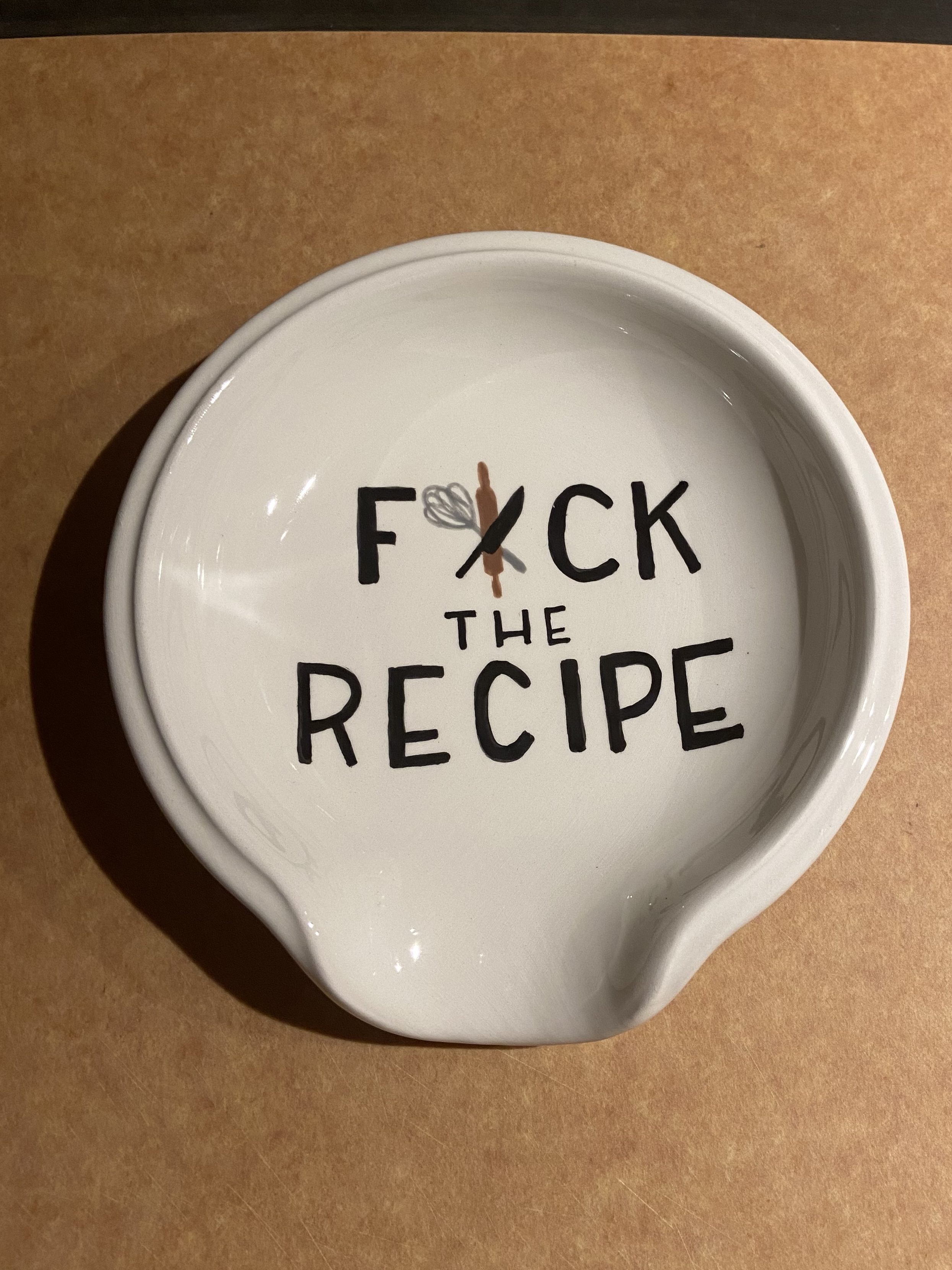
This motto isn’t about disrespecting tradition or dismissing the wisdom of those who came before us. It’s about recognizing that cooking is a living art, not a museum piece. Just think, those people who were the first at creating anything in the kitchen didn’t learn by recipes, they learned by watching, tasting, adjusting, failing, and trying again. Recipes came later, as a way to preserve and share, but they were never meant to be chains that bind us to someone else’s exact experience.
The beauty of “f*ck the recipe” lies in its invitation to trust yourself. Your palate knows what it likes. Your hands know when dough feels right. Your nose knows when something is perfectly caramelized. These are skills that no recipe can teach you, no matter how detailed or well-written. They come from repetition, from courage, from the willingness to taste as you go and adjust accordingly. There’s something deeply beautiful about the ephemeral nature of this approach, each dish I create exists only once, in that moment, never to be replicated exactly again. No two iterations of the same dish are identical when I cook from intuition rather than instruction. The pasta I made last month when I was feeling contemplative and patient is different from the pasta I made yesterday when I was rushing and distracted. Both were delicious, both were mine, both told the story of who I was in that kitchen, on that day, with those ingredients and with that particular mood.
This mindset has transformed my relationship with my pantry. Where I once saw limitations, I now see possibilities. No heavy cream for pasta? Whole milk and butter can create something lighter and just as delicious. No fresh herbs? Dried ones will do, or maybe this dish wants to explore an entirely different flavor profile. Out of white wine for risotto? Lemon juice or brandy might create something unexpectedly brilliant.
The kitchen becomes a playground when you release yourself from the tyranny of perfect adherence. It becomes a space where curiosity drives action, where “what if” becomes more important than “what should.” What if I added a pinch of cinnamon to this tomato sauce? What if I finished these roasted vegetables with a squeeze of lemon and a handful of fresh mint? What if I substituted honey for sugar in this marinade? Some of my greatest culinary discoveries have come from these moments of creative desperation or perhaps intentional rebellion.
This philosophy extends beyond ingredient substitutions. It’s about timing, technique, and intuition. Maybe the recipe says to cook something for twenty minutes, but your ingredients are behaving differently. Maybe it calls for high heat, but your stove runs hot. Maybe it suggests a particular cutting technique, but your knife skills are better suited to something else. The recipe should be a helpful guide, not a culinary martinet, no-one is looking over your shoulder in your kitchen at home.
Cooking this way has taught me to be more present in the kitchen, as is a good practice for life as well. When you’re not anxiously checking and rechecking instructions, you’re free to really observe what’s happening in your pan. You notice the way onions and garlic smell before they turn bitter and burnt, the way cream sauce looks just before it breaks, or the point of perfect fusion for hollandaise sauce before splitting. These are the real lessons of cooking, the ones that live in your body rather than on a page. And with each burnt garlic, broken cream, and split hollandaise, you learn. You learn, and then learn again until you trust yourself to complete the dish with your eyes practically closed.
“F*ck the recipe” is ultimately about trust, trust in your instincts, trust in your ability to adapt and improvise, trust in the idea that cooking is meant to be joyful rather than stressful. It’s about embracing the beautiful imperfection of a dish that’s uniquely yours, even if it’s not exactly what someone else intended.
This irreverent phrase became my culinary manifesto somewhere along the way, though looking back, I suspect it was always lurking in my bones, waiting for the right moment to surface. While I typically save my colorful language for stubbed toes and bruised knees, here it serves a different purpose entirely. It’s a declaration of independence, a battle cry for creative freedom. Because kitchens, at their core, are laboratories of possibility. They’re sacred spaces where artists and scientists converge, where poets find rhythm and dreamers discover.
This little spoon rest continues to sit on my counter, a daily reminder that the best meals come not from blind obedience, but from the courage to taste, adjust, and make something my own. In a world that often demands precision and conformity, the kitchen remains a place where my creativity and intuition can flourish, so f*ck the recipe.
 Edible Memoir
Leave a comment