I must admit something to you, I have a travel bucket list. Not just any casual maybe someday list, but a meticulously curated collection of dreams waiting to be lived. There are mile markers in life that people tend to care about, promotions, marriage, babies, etc. I couldn’t give two hoots about any of it, but travel, travel is my promotion in life, it is my one and only partner, and it is the legacy I choose to share with the world. While others collect status symbols or offspring, I collect passport stamps and memories that no one can ever take away. Next up on the bucket list, the spice-scented, sun-drenched streets of Morocco.
My fascination with Morocco began in the most unexpected way, through the screen of my television. There was this television show that I used to watch religiously, it had intrigue, history(ish), action, and a fascinating plot. The Grimm brothers probably never thought that their terrifying children’s stories would be adapted into a six-season, action packed television series that aired every Friday at 9pm PST. Grimm was my weekly escape, the perfect blend of procedural crime drama and supernatural fantasy that kept me glued to the screen for years, not to mention it occurred nearly in my backyard which imbued it with some kind of contrived connection.
The main character, Nick Burkhardt, a Portland detective who discovers he’s descended from a line of guardians called “Grimms” who protect humanity from supernatural creatures, had this favorite dish that was mentioned a few times throughout the series. It did not originate from Deutschland, despite the show’s Germanic roots, but instead hailed from the Mediterranean climate of Morocco. His favorite dish, that was made and mentioned a few times, was the spice laden, preserved lemony, saffrony flavors of one of Morrocco’s cherished dishes, Chicken tagine. From the moment I saw it on screen, I knew I had to try it. I was in my impressionable teenage years after all, and food featured in my favorite shows always seemed to take on a mythical quality.
I guess I have to admit, alongside my travel bucket list, I have a cooking bucket list as well, a collection of culinary challenges that grows with every travel documentary, foreign film, and yes, supernatural TV show I consume. The two often intersect, foods I’ve tasted abroad that I want to recreate at home, or dishes from places I haven’t visited yet that might give me a taste of what’s to come. Grimm added several items to both lists, with Morocco landing very damn near the top.
Years later, with that television-inspired memory still lingering, I was ready to tackle what I believed would be a complicated and intimidating dish. After some research, I quickly learned that, one, tagine actually refers to both the pot and the stew-like dish that is served in it, and two, I did not own the correct pottage for this dish. I mean who just casually owns a tagine. Well maybe you do, and maybe you even use the tagine for non-tagine things. I certainly didn’t have one tucked away in my cupboards, and I still don’t, that’s a kitchen investment for another day.
I was a bit nervous about cooking this particular dish for years. I’m not going to let on for how many years exactly, but lets just say its been a long time coming. Every time I flipped through a cookbook or scrolled through food blogs, I’d see those beautiful conical clay pots and immediately feel intimidated. What if I ruined a dish that was central to an entire culinary tradition? What if my Western palate couldn’t properly balance those complex North African spices?
I was so nervous about messing up, that I made New York Times, “easy weeknight” version of this complex meal, aptly titled Weeknight Chicken Tagine. Baby steps, right? Some might call it culinary cowardice, but I prefer to think of it as respectful caution. After, quite frankly, crushing it with the simplified version, I moved on up, dare I say, I promoted myself, to the traditional version, and used another New York Times recipe. This time, I committed to authenticity where it truly matters, the flavors. I sourced preserved lemons, bought saffron that cost more per ounce than gold (only a slight exaggeration), however, I did not (yet) invest in a proper tagine pot. I had to make sure I actually liked the dish, duh.
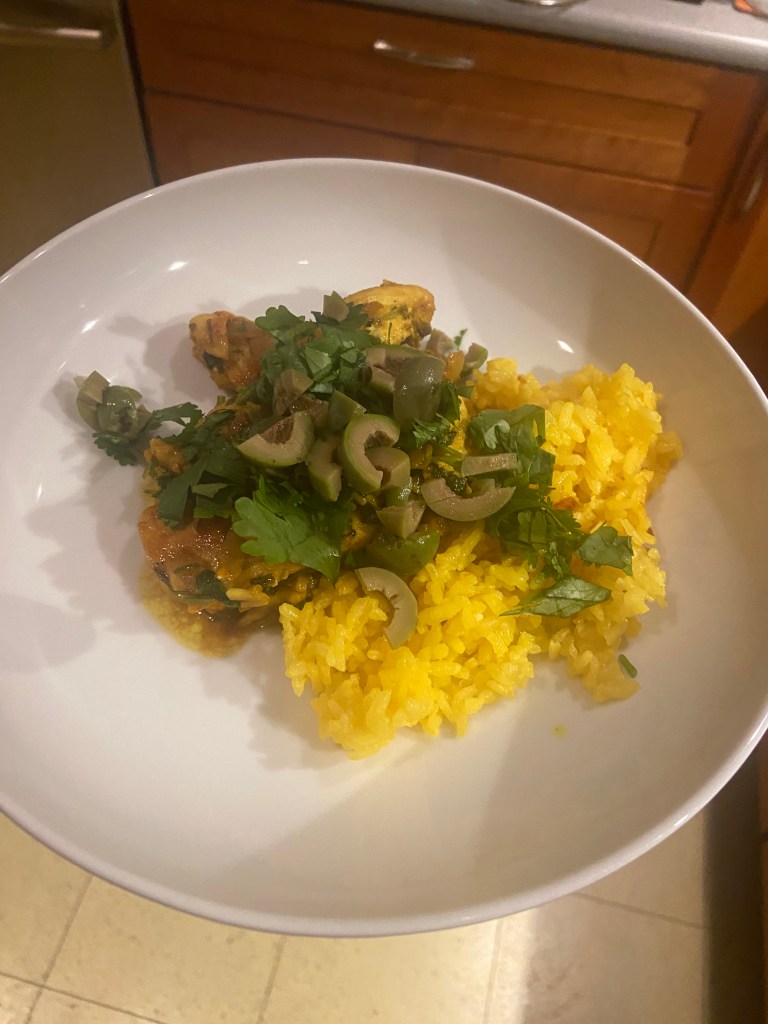
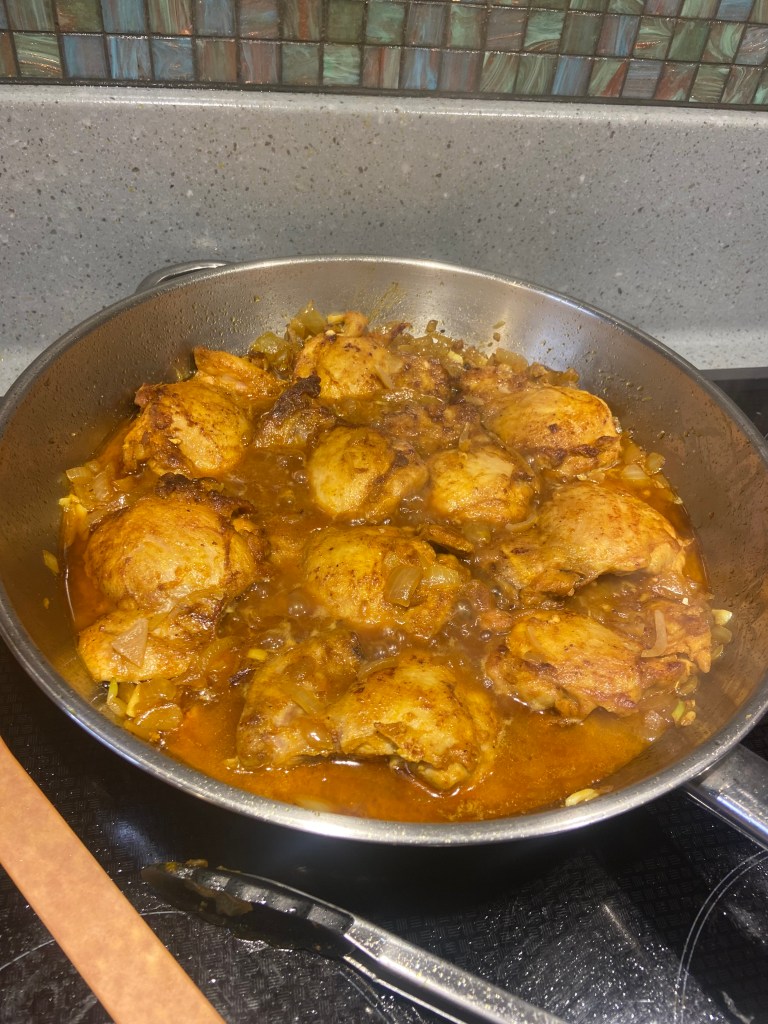
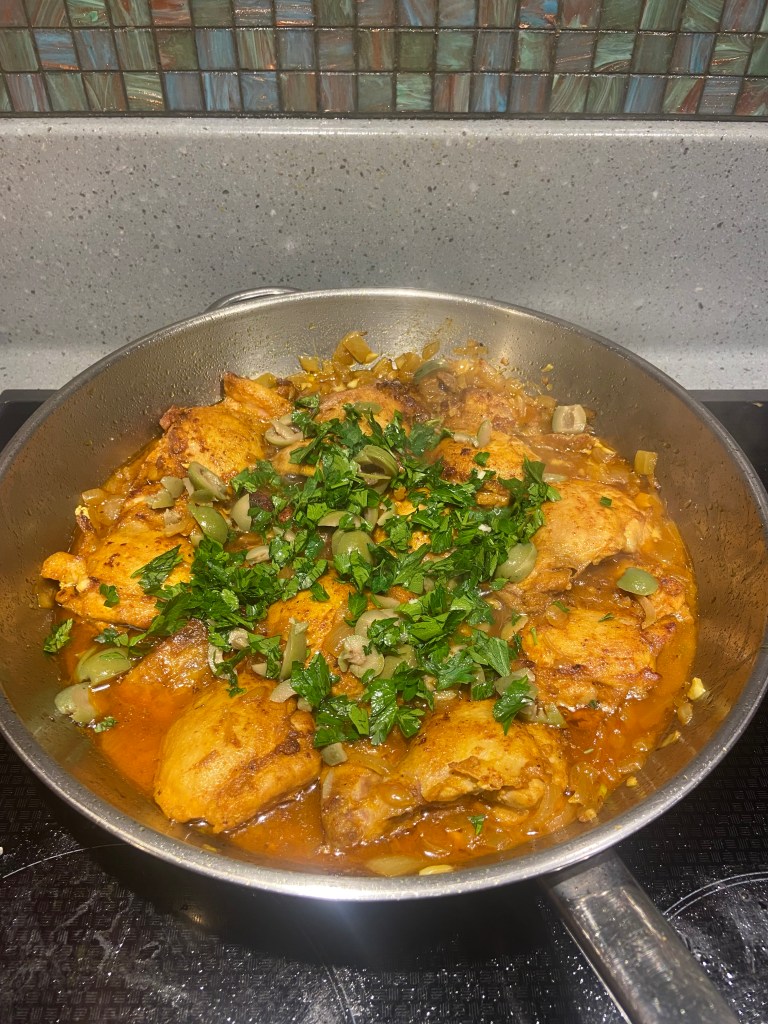
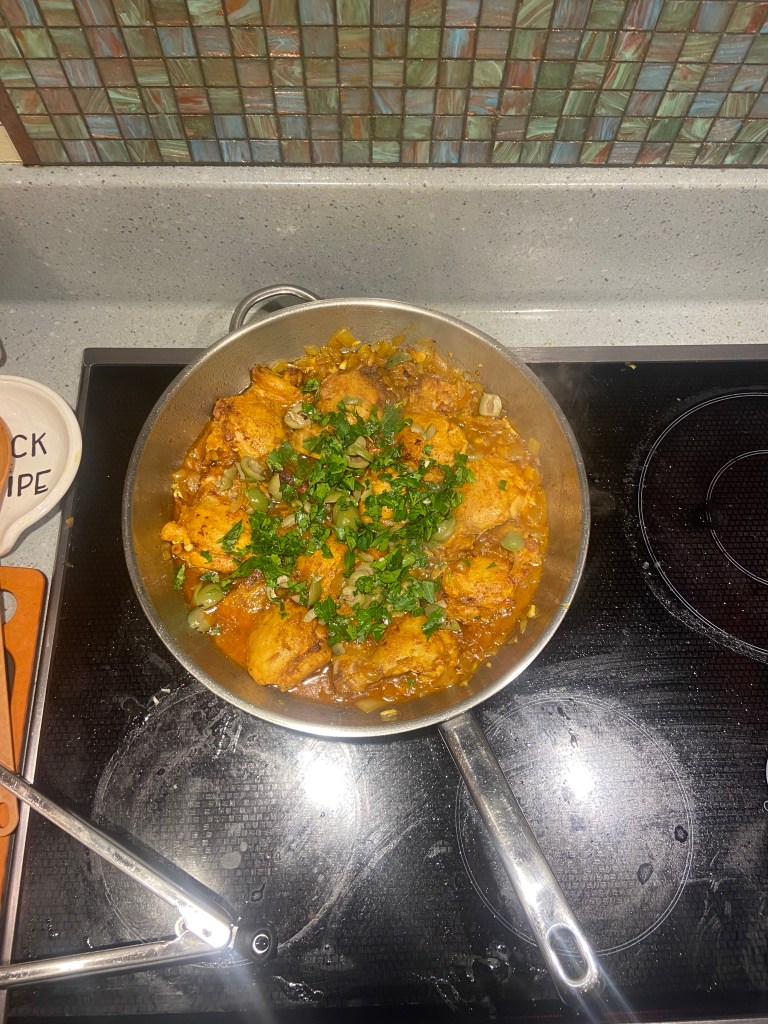
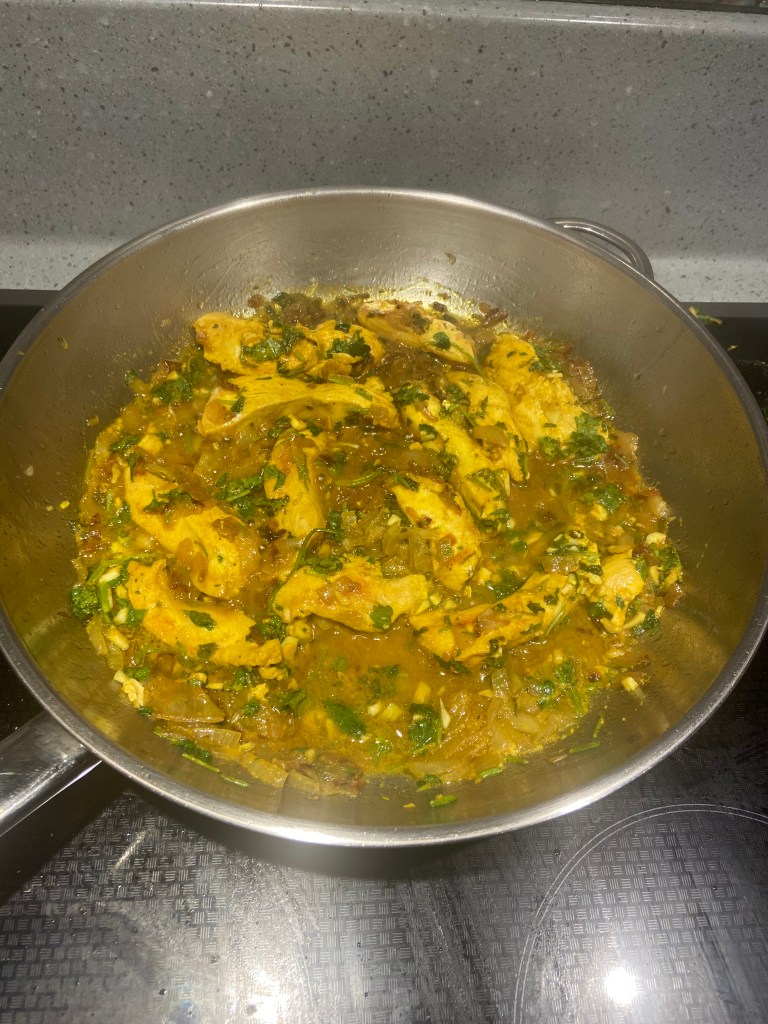
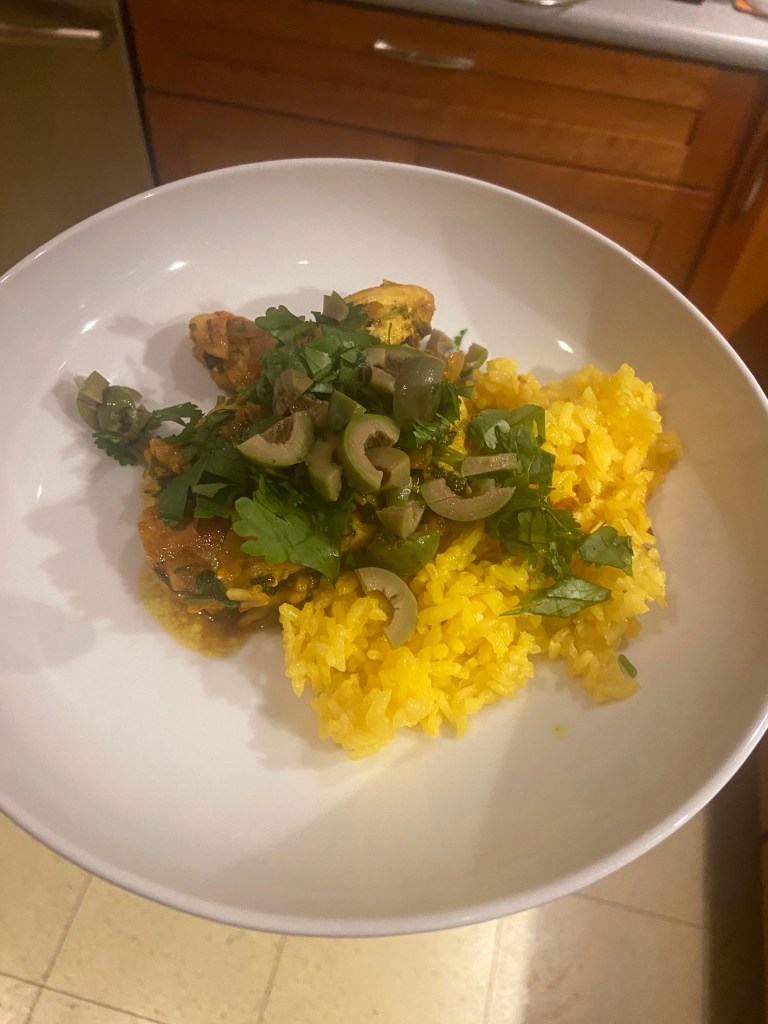
My kitchen filled with the aromas of cinnamon, cumin, and ginger as the chicken simmered slowly with onions, garlic, and those precious threads of saffron. The preserved lemons added a bright, complex tang that no fresh lemon could ever achieve. Green olives brought a briny punch that cut through the richness of the sauce. When I finally lifted the lid after hours of patient cooking, the steam carried with it the essence of Moroccan souks and riads. The chicken had taken on a golden hue from the saffron, and the sauce had thickened to a luxurious consistency. I served it over some non-traditional saffron, turmeric rice, and scattered some fresh cilantro.
That first bite transported me. Not just to the fictional world of my teenage television obsession, but to the narrow alleys of Fez, the bustling markets of Marrakech, the coastal breezes of Essaouira, places I have yet to visit in person but could now taste on my tongue.
What surprised me most wasn’t just how delicious it was, though it was indeed magnificent, but how accessible the cooking process turned out to be. All those years of intimidation, for what? The tagine is fundamentally a slow-cooked stew. It requires patience more than technical skill, quality ingredients more than fancy techniques. And if I could make such an exquisite meal with the meager equipment of an American kitchen, I can only imagine what it would taste like from a true Moroccan grandma, in a true Fes el-Bali kitchen.
This dish is a solid reminder that sometimes the things we build up as intimidating challenges often turn out to be the most rewarding once we finally face them, whether that’s a complicated recipe or a solo trip to a foreign country, or just finishing that damn project. When you’re young, things often seem insurmountable and unscalable, and as an adult that perspective really doesn’t change, but your attitude towards things in life isn’t earth shattering anymore. Sure, sometimes things still feel apocalyptic, but most of the time, I can just say, fuck it. I’m not that sixteen year old girl anymore. Plus, we tend to build things up in our heads when we’re young, when I was in kindergarten I could have sworn my eighth grade buddy was a full blown adult.
Sometimes I window shop for tagines online, admiring their glazed and sometimes unglazed exteriors and terracotta color. I imagine how they would look on my countertop and what new dimension they might bring to an already beloved recipe. It’s on my kitchen wishlist, for sure. There I go again with the lists, I think I’m just a list person.
My current travel bucket list top 3, includes Morocco, Peru, and Scotland. Greece was up there, and had been number one for the majority of my life, ever since the beginning of my obsession with mythology in like 5th grade, thank you Ms. Semandiris. This year marked a few important milestones and Greece was always the plan. I still haven’t made it to Morocco obviously, that bucket list item remains unchecked, but through this dish, I’ve traveled there now exactly two times in spirit, which is twice as much as my actual, physical body. My tagine may not be perfectly authentic, no doubt a Moroccan grandmother would have plenty of critiques, but it’s become my own personal portal to a place I hope to one day experience firsthand.
It’s funny that my fascination with an entire country originated from a television show about fairy-tale monsters. The fascination has obviously turned into more than that now, as I grow older and appreciate the nuances and cultures of all the countries on my bucket list. But when I cook for people, little do they know that they’re tasting my vicarious travels, and my sometimes book, movie, or television inspired dishes, right in my PNW kitchen.
 Edible Memoir
Leave a comment