Grammar Warning: I may have sailed adrift a handful of times in this chapter. Beware of nautical terminology. If you’re not a pirate, refer to the glossary at the end for definitions.
Ahoy, you have landed upon one of my most requested dishes, which isn’t saying too much considering my customer pool consists of my CDC size-approved quarantine squad, nonetheless, here it writes.
The origin story goes as follows: I created this particular dish on a night where I peered at my lackluster fridge, picked up a fully-zested, and half-juiced lemon and asked myself: What can I make with this? In the space of an epiphanal blackout, there I was, gathering my seafood elements (that were near and reaching their shelf-life), collecting my half-drank bottle of pinot grigio, and excavating through non-time-stamped left-over containers and slews of niche jam-like condiments to unearth a find of a lifetime, half a jar of bygone capers. Voilà, the sails caught wind, and the dish was cast-off1.
Since that big-bang, I have recreated the dish with varying amounts of success and with a slightly modified edible element list each time; there may be a correlation there, but I’ll pipe down2 now. The variations include a different bottle of dry white wine, frozen vs. fresh seafood, introduction of mussels (and muscles, rolling out fresh pasta is no joke), the removal of the mushrooms, an addition of seasonal greens, and the use of assorted pasta shapes. Additionally, I’ve made the dish with much too little sauce, a few times with a more of a brothy sauce, and once where I forgot to add in the pasta water. Each variation taught me something new about this wonderfully forgiving dish
This dish has been eaten on many a random Wednesday evenings, a dinner party with friends and loved ones, and over a Father’s day weekend getaway. The beauty lies in its flexibility, you, like me, probably have most ingredients, if not all, of the simple elements for this dish killing time, knocking-bottles in the fridge; it’s probably because I love a lemon focused dish. Owning a citrus farm might be a wise, future, personal investment, I’ll have to stem my enthusiasm for now, I don’t want to rind myself up. This humble and simple fare with chaotic beginnings quickly became a staple in my household, and a repeat special event request, and it can in your abode. And if you’re an heir to a citrus farm, then call me.
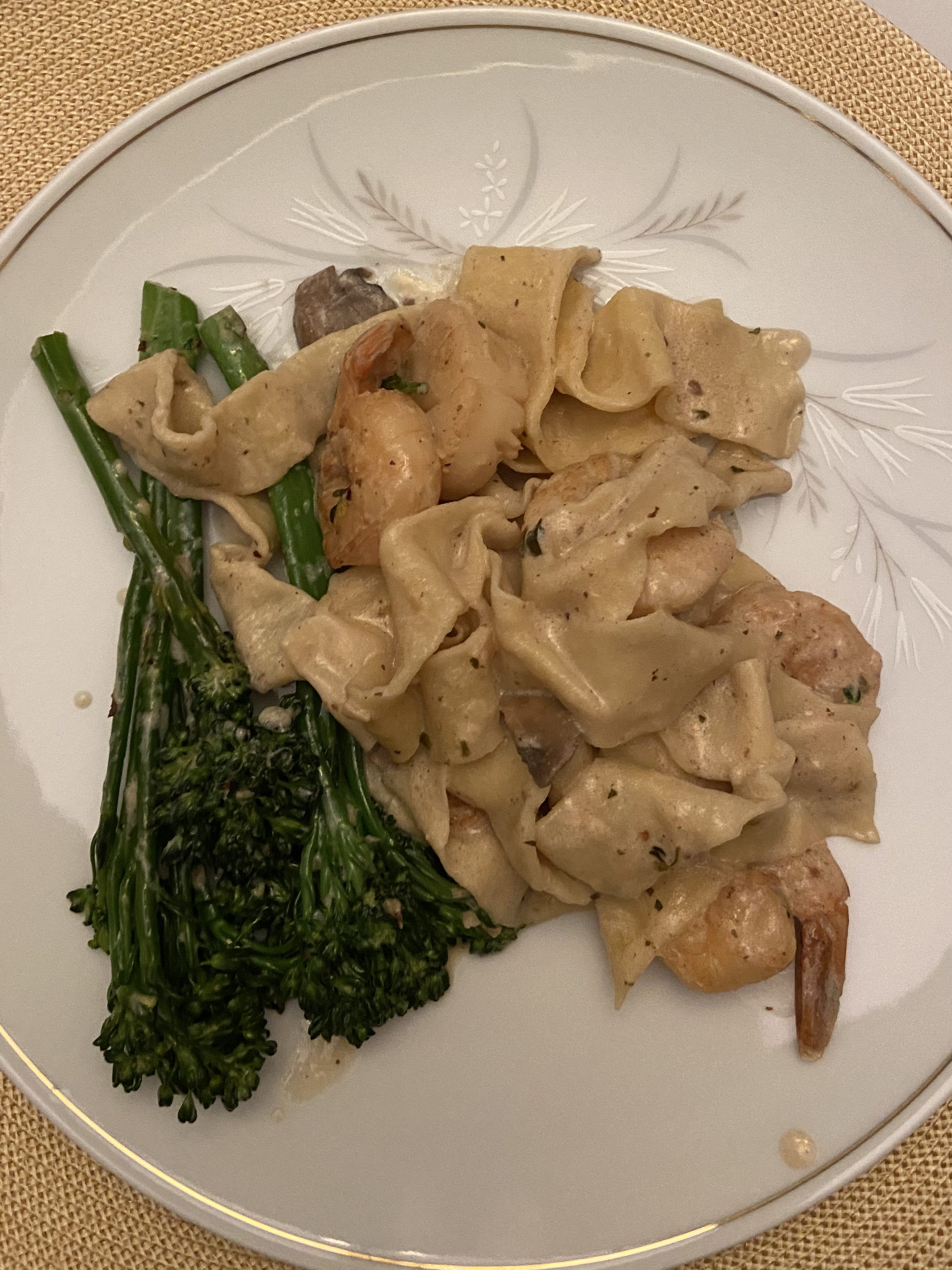
I’ve made this dish on more than one occasion, unfortunately, my natural inclination is not to pick up a camera and snap a picture, of anything really, thus the picture evidence is lacking. Coincidentally, the one and only time I’ve captured picture proof, I had actually clobbered together some fresh, homemade pasta for the very first time. You can find the bad, the good, and the messy, homemade pasta process here.
Edible Elements
- Seafood – Scallops, Shrimp, Prawns, Mussels, Halibut, explore and sea what seafood suits you and yours
- Pasta – roll your own, buy a box, or use all of that leftover pasta that was frugally saved for the next pasta night
- Lemon – zested and juiced
- Half & Half, or milk, heavy cream, or a combination, you might have the backwash amount of each, just use what you have
- Salt & Pepper
- Dried Red Pepper Flakes – for those who dare to be spicy; add at your own tongue’s peril
- Dill – a pinch
- Parsley – a dash
- Oregano – a smidgen
- Butter – at your own discretion; salted or unsalted, just balance the salt later
- Capers – the secret to this dish
- Flour – you could use cornstarch, but I like the sort of hazy appearance flour gives the pasta sauce
- Onions &/or Shallots – whatever you have, we’re not picky here
- Garlic – many a cloves, let’s just say, I’m not a vampire
- Dry White Wine – I love to use Pinot Grigio, my favorite is Cavatappi (not related to the macaroni of the same name and I have zero affiliation with the wine brand), it’s crisp, citrusy, and perfect with seafood not to mention you can pour yourself a glass while you cook; I quite literally always have a bottle of it in my fridge
- Mushrooms -(optional)
- Greens – you guessed it, just find something
- Baguette – for dipping!
Well okay then, anchors aweigh3. Here’s how to navigate these culinary waters.
Step 1: Sear the Seafood
Heat oil and/or butter in a large skillet (the only pan you’ll need, I’m a one-panner kind of gal). Sear your seafood until lightly golden, like a perfect summer tan minus the annoying sunburn. That is unless you’ve chosen to add another seafood that prefers a good steam to a tan. We have a different bearing4 for crustaceans and creatures that prefer a good steam, you’ll deal with those fussy ones in the offing5.
Note: Steam-loving creatures like mussels get special treatment later, hold your horses, or should I say, hold your seahorses.
Remove seafood to a clean plate and set aside.
Step 2: Build the Base
Add a bit more fat (oil or butter) to the pan, toss in your onions and garlic until they just begin to sweat. If you’re adding mushrooms now’s your chance. You could also add some greens here, greens such as broccolini, broccoli, or asparagus. You could forgo the verdant addition for the moment, and add some spinach later, just add some greens for greenness sake. Go where the tide takes you.
Step 3: Spice It Up
It’s time for some spices, well salt and pepper, obviously, then dill, oregano, parsley, and some dried pepper flakes. Ruminating on the spices in this dish, makes me think of the glorious history of spices and their mysterious & mystical shrouded origin stories; the silk road, the Dutch East Trading Company, hidden islands, mythical creatures protecting their spicy treasures. Next time you look at those bottles of colorful powder, just remember they have extraordinary histories. Throw in all the spices and more, do what makes you happy. Use the spice, respect the spice, but for goodness sake, don’t overuse or abuse the spice. Taste the dish, figure if your tastebuds enjoy the level of spice as is or add more if needed, remember you can always add more but you can never take away.
Step 4:
Deglaze the pan with your wine of choice, a white wine, no reds please. It’s beautiful sight, adding alcohol while cooking and even in baking for that matter. The steamy alcoholic aroma emanating from the mixture might have a bitter smell at first, but it is part of the process, trust the process. Add more if needed but always save some for your wine glass.
Sprinkle a bit of flour, enough to thicken and soak into the butter and wine, think equal ratio of butter and flour. Cook off the flour a bit.
Now, whisk in your cream, be it heavy, some percentage of milk, or half & half. Whisk at a slow knot6, like the speed when you’re coming into dock. Using your own intuition, add more butter if it needs it or if you want it, I’m not the butter police. Pour in some capers; the caper brine doesn’t hurt. The brinery the better. Meanwhile, zest a lemon or two over the pan and squeeze those lemons like you’re at risk for developing scurvy. Let simmer until properly incorporated.
Step 5: Pasta
Meanwhile, salt a pot of water. Salt the water until it literally tastes like the sea. Boil your choice of pasta until al dente. With a slotted spoon or some tongs, gently move the pasta into the pan with the sauce. Stir the concoction. Plop that steam loving seafood atop sauce. Cover with a lid. Let simmer.
Semi-pro tip: Don’t drain the pasta with a colander, use instead a slotted utensil, tongs, or a large prong. While you incorporate the pasta with the sauce to create a sauce, pasta water is also introduced. This will thicken your sauce so that each stand is coated perfectly.
Step 6:
Once the simmering has finished, serve accordingly. Portion your plates per person or per what kind of exhaustive activity you performed that day, or more importantly, just because you want a big bowl of pasta. Enjoy the carbohydrates, I’m not judging, you shouldn’t judge, and if someone in your life is judging your pasta bowl size, then they can just walk the plank. Life’s too short for small bowls of pasta.
By and large9, Whether you’re dining solo on a Wednesday night or entertaining a crew, this dish delivers every time. The combination of briny capers, bright lemon, and tender seafood creates magic that would make even the saltiest sea captain weep tears of joy.
Eat up me ‘earties, yo ho! May your seas be calm and your pasta perfectly al dente.
Special Handling of Mussels
When buying mussels, please save your stomach some ache and buy from a reputable fish market. The mussels should be displayed in a case, on ice, not submerged in water. The mussel shells should all be closed when you buy them. I can’t emphasize this enough: only buy those that are still closed. If they are open, they are dead. If they are still closed, they are still alive, and you need your mussels to stay alive up until the point you put them into your cooking pan. Once bought, they should be placed into a plastic package to bring home and on ice for your drive, bike, walk home (I don’t know how you transport yourself, get in those steps in when you can). When you arrive back home, remove the mussels from the bag or they will suffocate, and/or pee themselves, and then the rest of them will sit in urine until you pull them out, it’s extremely undesirable and foul. I suggest laying them in a bowl, placing in the fridge, and letting them just chill before their very imminent death, their bitter end7. Before you choose to cook them, run them under water and scrub away any debris or formations on the shells. Pull or cut the beard out and away from the shell. Additionally, buy mussels the day of your cooking expedition, don’t risk eating overnight urine-soaked shellfish. Once you’ve created the sauce, place the mussels into the sauce, and cover with a lid. Use only the ones that have continued to keep their shells closed, a.k.a. the ones that have survived the trip from the market, car-drive, and stint in the cold box. You only want to cook live mussels. Don’t test your body’s ability to fight off rotten sea-sickness. Make sure those mussels are seaworthy8. Cook until all of the shells have steamed opened.
Nautical Footnotes Glossary
- A boat untied and sailing away from land; beginning its journey
- To stop talking or making noise
- The position of the anchor as it’s raised to clear the bottom
- The direction of an object relative to the main vessel
- The near or foreseeable future
- A measure of speed
- The end of the rope
- Able to meet conditions safe for usual sea conditions
- On the whole
Citations
“10 Words and Phrases with Nautical Origins”, Merriam Webster. https://www.merriam-webster.com/words-at-play/common-sailor-jargon/slush-fund
Fortey, Ian, “Boating Basics Glossary of Nautical Terms”, Boat Safe. October 12, 2020. https://www.boatsafe.com/boating-glossary-terms/
 Edible Memoir
Leave a comment